

Tricord
The custom ERP that became a fulfilment business's competitive advantage.
How Greenbox gave Tricord the freedom to shape its fulfilment service around each client – not around its software.
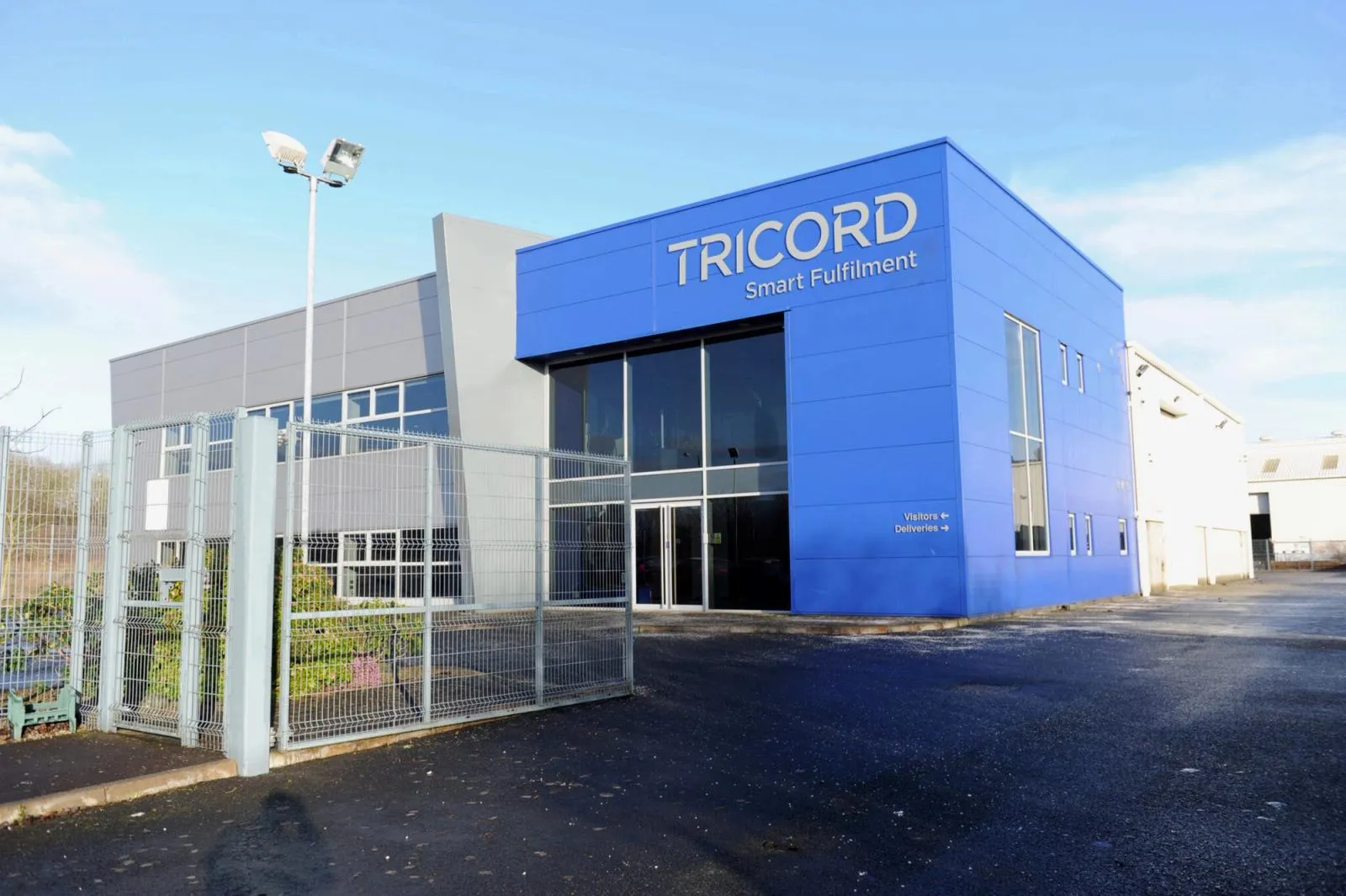
The problem:
Tricord’s operation depends on orders being processed accurately, stock being visible, warehouse teams having the right information to pick and pack each job, and every dispatch going out on time and in line with the client's requirements.
For many years, that operation ran on off-the-shelf ERP software. Tricord had been through more than one system, and each time the same pattern emerged. In nearly every area of the business, the team had a choice: adapt the process to suit the product, or live with an interface that slowed them down.
Individually, each of those compromises looked inconsequential. Collectively, they weren't. Workarounds added administration. Slow processes absorbed time and put pressure on margin. And when the software at the centre of the operation made it harder to work quickly and consistently, there was a more serious risk: Tricord's ability to deliver against the service levels its clients depended on.
Choosing another off-the-shelf ERP would have meant accepting a different version of the same compromise.
What we built:
We engineered Greenbox - a custom ERP built around Tricord’s fulfilment operation rather than a generic ERP model.
The first release was delivered over 12 months, shaped throughout by the people across Tricord who understood the operation and would use the product every day.
Greenbox manages the fulfilment process from order capture through to stock management, payment, warehouse fulfilment, dispatch, reporting and returns. Orders can be received in different formats or fed directly from client systems. Stock is visible in real time, orders move into the warehouse with minimal manual intervention, and carrier integrations help select the appropriate delivery service for each dispatch.
But once the product was in operation, Tricord began to see that the value of having its own ERP went much further than replacing the software it had outgrown.
It could be adapted around the needs of individual clients, connecting directly with client systems and marketplaces, supporting bespoke data and fulfilment workflows, and giving customers their own access to real-time information. Customer-facing communications and paperwork could also be delivered under the client’s own brand.
That meant Tricord wasn’t restricted to fitting every customer into the same ERP workflow. The product could support different ways of working depending on what each client needed.
What began as the product running Tricord’s own operation became part of how the business delivered its service - connecting more closely with client operations and supporting workflows that went beyond traditional order fulfilment.
Why it worked:
Greenbox was shaped by the people who understood Tricord’s operation best.
That meant the product could reflect the detail and nuance of how the business actually worked, rather than reducing those processes to what a generic ERP was capable of supporting.
Just as importantly, Tricord had control over the product. It wasn’t dependent on a vendor roadmap or limited to functionality designed for a much broader market. When a client needed something different, Tricord had the freedom to respond.
That combination - a product built around the operation and the freedom to develop it where there was a clear need - gave Tricord something more valuable than a better-fitting ERP. It created a product that could support the way the business wanted to serve and differentiate for its clients.
Seventeen years after its first release, Greenbox remains in operation and is still maintained by GCD. Its longevity comes not simply from continuing to run, but from continuing to give Tricord the flexibility to shape its service around the businesses it works with - keeping the product relevant operationally and commercially.